Archive for October 2011


life as a creative process
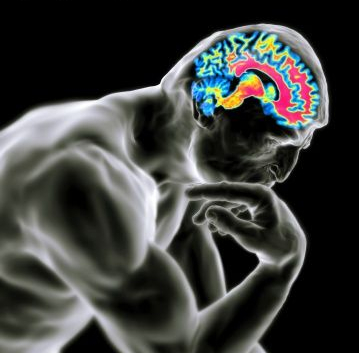
thinking about thinking
Just as the heart ceaselessly beats, the mind ceaselessly thinks. All day, everyday, our minds are busy processing information, developing explanations, replaying the past, imagining the future, interpreting reality, assigning value, creating stories, thinking about thinkingproducing images, having insights, exploring perceptions, asking questions, arguing positions, and on and on. In fact, at no time is the mind turned off. Even during sleep it continues to do what it does in the form of dreaming. Thinking is not something we do here and there; it is a fundamental animating principle of human life itself and is occurring at all times in the foreground and/or background of our lives.

Much of this thinking is automatic. David Eagleman, Assistant Professor of Neuroscience at Baylor College of Medicine, writes, “The first thing we learn from studying our [brain] circuitry is a simple lesson: most of what we do and think and feel is not under our conscious control.” In other words, most of our habits of thought operate on a subconscious level – just outside of our conscious awareness – and more often than not we remain oblivious to the dynamics and consequences of their presence. The automatic patterns and habits of thought we have in adulthood did not appear overnight or fall out of the sky. Like most of our personal habits, they have been with us for a while. They were built up over time and came into existence as a result of many interrelated and intersecting factors throughout childhood and adolescence. Of particular importance to the development of our personal thought patterns is the repetition of relational and emotional dynamics that we repeatedly experienced (and participated in) during what are commonly referred to as our formative years – the years from birth to adolescence.

our formative years
The hardware (brain and nervous system) and the software (habits of thought and emotion) of who we are literally comes into formation during childhood and adolescence; both are deeply influenced and shaped by our interactions within the social environments we grow up in. As we meander through those early years of life, we are conditioned into habitual ways of processing information and perceiving reality. By the time we are adults, we relate to these habits simply as givens. That is to say, we do not register the fact that our habits of perception came into existence via social and psychological processes, and that we maintain their existence (we continue to perpetuate them) via current social and psychological processes. It is useful in adulthood to recognize the createdness of our thought and emotional patterns because it helps us to see that, like all habitual activity, they continue to be created in our lives today, one day at a time, depending on what we prioritize, how we think, what we do and how we live.

brain plasticity
The ways in which we think about and interpret reality are not written in stone; learning and conditioning are life-long. Changing our minds, our hearts and our habits of living are possible at any age. Certainly we are much more malleable in childhood and adolescence, and certainly we come into young adulthood powerfully shaped by all that has transpired during those years, but we have the capacity for personal growth and transformation throughout our entire life span. As recent research in neuroscience (http://tinyurl.com/3c3meg9) is discovering, our “formative years” actually never end. Throughout life, we are forever “forming.” Each of us is a work in progress – in body, mind and spirit – as long as we live.

Given this reality, we are left with a question each of us must face:

How shall we live?

What makes most sense to me is to take what life gives us (“the raw material”) and to create. Sometimes alone. Mostly with others. But create. Always. Create. Your relationships. Your career, Your moods. Your perspectives. Create.

sex scandals, media and the mind

celebrity sex scandalI recently read about a therapeutic technique whereby people are encouraged to repeat certain helpful messages to themselves each time they use their MetroCard to enter the NYC subway system. Since people use the subway at least two times per day in NYC, the thinking goes, swiping one’s MetroCard can be used as a reminder, an occasion to engage in a brief exercise of positive and creative thinking.

Analogously, every wisdom tradition includes techniques designed to help people regularly re-focus their thoughts on things that uplift the spirit, discipline the mind and reinforce deeper truths about human life. Catholics caressing rosary beads and Buddhists preparing tea are such examples; each time these activities are engaged in, the practitioner (ideally) does so with a heightened consciousness, an open heart and purposeful intention. At the risk of sounding flip, I see value in using the repeated occurrence of “celebrity sex scandals” in a similar way. Let me explain.

re-thinking the phenomenon of gossip
In Grooming, Gossip and the Evolution of Language, Robin Dunbar makes an argument for the idea that evolution has equipped us with involuntary instincts to gossip – that gossip accords us fitness benefits, has survival value and is built into the hardware of who we are. Just as chimps groom each other, humans gossip: both serve to cement social ties and are evolutionarily advantageous. Interesting idea and maybe so. My point is that even if Dunbar is correct, it is still the case that we (humans) need not be completely determined by our genes. As the saying goes, DNA is not destiny.

mindfulness: a creative response to gossip and sensationalism
The essence of mindfulness is to tune into our automatic emotional responses and subjective experiences, while de-focusing our minds and letting thoughts sort of come and go without becoming attached to them. The physiological experience is one of slowing down, reconnecting to the body and shifting into conscious and rhythmic breathing. Such a practice allows us to create space between stimulus and response, giving us the power to exercise choice in how we respond to information, situations and events.

What I am recommending is that you shift into a state of mindfulness when you encounter media stories about a celebrity sex scandal. Lord knows this will accord you ample opportunities to practice mindfulness! (i.e. Ashton Kutcher, Anthony Weiner, Arnold Schwarzenegger, Jesse James, John Edwards, Mark Sanford, John Ensign, David Wu, Eliot Spitzer and others).

taking responsibility for the activity of our minds
Modern life requires that we process boatloads of information – data that comes at us relentlessly and at lightning speeds with ever-present bells and whistles. Unfortunately, we often forget that we have CHOICES and OPTIONS in how we can respond and relate to incoming information. Regarding media sex scandals, we can exercise our genetic tendencies (craving for gossip), or we can notice that impulse and then decide to do something different.

The point of using or relating to celebrity sex scandals in a new way is designed to RE-sensitize ourselves (as opposed to becoming more and more desensitized) to two things: (a) how easily we can be distracted from our own lives by other people’s dramas; and (b) how hurtful human beings (each of us) can be to other people.

Thus, once you’ve slowed down and created some space between stimulus and response, turn your mind toward a more personal line of questioning:

  1. “Has someone betrayed me in my life, and have I gotten sufficient closure on that situation?”
  2. “Have I prioritized my own gratification (sexual or otherwise) at my partner’s expense lately?”
  3. “Are my partner and I as close as we need to be, or are we going through the motions to some extent?”
  4. “Do my partner and I need to sit down and discuss our relationship?”
  5. “To what extent am I avoiding closeness altogether due to the fear of getting hurt?”

find the lessons
Even if infidelity is not an issue in our lives, it’s usually the case that we could stand to do some serious reflection on the ways in which WE are participating in OUR relationships and OUR lives, as opposed to wasting our limited supply of attention on other people’s mishigash.

Instead of simply rubbernecking or becoming even more desensitized to the perniciousness of a celebrity-saturated media culture, start using sex scandals (simply because there are so damn many of them!) as a reminder to check in with yourself and your own attitudes, assumptions and behaviors around sex, intimacy, communication and honesty in your own relationships.

When we prioritize learning and growth in our approach to life then everything around us can be grist for the mill, lessons from which we can deepen our own commitment to living well. Not in obsessive and overly ambitious ways, but in simple and steady ways. Ordinary experience itself can be our greatest teacher when we practice mindfulness and when we take responsibility for how we process (and what we do with) the information the world throws at us each and every day.

appetites, addiction & relationality

Human beings have a variety of powerful appetites. We hunger for food, love, fun, meaning, physical affection, bodily safety and material security.  Adults hunger for sex. Children hunger for play.  Both hunger for a sense of competence in navigating their environments. The list goes on.

These appetites are not frivolous desires; they are physiological mandates required by our bodies and minds, and we need to fulfill them just as we have to fulfill our need for sleep. These needs press upon us throughout life. Either we learn to meet them in healthy ways in adulthood, or we suffer consequences. In my line of work, it’s not uncommon for people to seek help precisely because one or more of their appetites is out of control and has them in the grips of obsession and compulsion.  (See The Big Book of Alcoholics Anonymous for a deeply insightful explication of this idea).

Which of your appetites is most out of balance?addiction & balance

Human beings have a remarkable ability to go to extremes in one direction or another. We can be desperate for love or cut from the feelings of needing others. We can compulsively eat or obsessively restrict. We can spin grand narratives about our lives or find ourselves devoid of meaning and purpose. We can go from hero to zero in a matter of seconds. Being out of balance in life is painful, disheartening and serves as a major obstacle to moving forward.

  • Do you overindulge any of your appetites – and feel repeated frustration and shame about it?
  • Do you make endless promises that you will “control” yourself, but continually find that your methods are not working?
  • Conversely, have you cut yourself off from any of the basic human appetites because trying to meet those needs just seems too damn complicated?

a relational perspective on addiction
Addiction takes many forms. That is to say, human beings can become addicted not only to substances (alcohol, drugs, food, pills, cigarettes) but also to other people (romantic obsession), physical activities (gambling, sex, social isolation) or mental activities (worry, self-criticism, anger, envy). Dr. Jeffrey Roth writes that addiction is a disease that grows out of “an impaired ability to establish and maintain healthy, emotionally regulatory relationships.” Dr. Philip Flores refers to addiction as an “attachment disorder,” meaning that it results from and perpetuates a fundamental rupture in human connection. On the basis of these perspectives, it is no wonder that building and maintaining healthier relationships with oneself, others and with something greater than oneself are so central to 12 step recovery and other forms of healing from addiction.

Human beings heal and grow in the context of relationships. As the saying goes, no one gets well alone. Yes, there is work to do within one’s own mind and heart, but if that process is not witnessed, supported and reinforced by other people, it will not be nearly as effective. We are social creatures to the core.

bringing our appetites into balance
We need others and they need us. The first step in rebalancing our appetites is admitting that going it alone is not working. This is the beginning of addressing the rupture between oneself and the human community. Each of us must participate productively in a tribe (i.e. a set of relationships, a group, a family of choice, a social network) that supports our healthiest selves, facilitates our emotional development and challenges us to grow and to contribute something positive in the world. If your appetites are (and your life is) out of balance, just Google the issue you are struggling with – there are hundreds of people in your area (and around the world) struggling with the same thing. You need them and they need you.