Dinner Table Violence
I was about twelve. We sat down as a family for dinner. Mom beamed.
“I have good news,” she said.
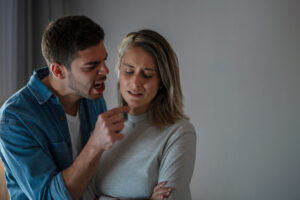
Without missing a beat, Dad shot back.
“What? You have cancer?”
I can still see her face collapsing.
Rage. Hurt. Humiliation.
And I can still feel the familiar nausea under my own armor, already bracing for the cold war to come.
Cabinet doors slamming.
Silence sharp enough to peel the paint off the walls.
But let me back up.
I Miss My Dad
I miss my dad. A lot.
By the time I began truly getting my life together, he was already descending into dementia. Oddly, I cherished what his dementia loosened. He became unguarded. Childlike in moments. He spoke about things that had always been off limits.
He died in 2018. Mom followed in 2020.
I don’t think I could write any of this if either one were still alive.
The Cracks in Dad’s Armor
In his dementia he’d sometimes whisper with a child’s guilt, “I should not have spent time with those ladies.” I never asked what he meant. Maybe it was better that way.
He also spoke wistfully about his mother. I had never seen that softness in him.
He grew up in a one-bedroom apartment in Bay Ridge, the middle of three kids. When he was eleven, he found his mother unconscious on the floor. The ambulance came. He never saw her again. His baby brother and teenage sister were thrown into roles they were never prepared for.
And years later, when I was a teenager on Long Island discovering LL Cool J and Run-DMC, he pulled me aside and growled, “I grew up on the streets. You did not grow up on the streets.”
It was his way of saying, you don’t know what pain is yet.
And in his way, he wasn’t wrong.
But the way he said it cut off the one thing we both needed – a safe, nourishing connection between father and son.
The Wounds Beneath the Cruelty
I don’t share any of this to vilify him. Not at all. I share it because the older I get, the more compassion I feel for the man he was compelled to be.
Compelled by forces larger than he was.
Humans do what they know.
And we know what we’ve learned.
Yes, he was cruel to Mom at times. And Mom was cruel to him too. But it wasn’t the whole story. They were also warm, funny, loving, generous people. That’s what makes family systems so hard to speak about: love and injury, warmth and trauma – they are all braided together.
What I see now is Dad’s emotional malnourishment.
How he overcompensated by trying to appear smart, powerful, hard to hurt.
How raw he felt under all that.
How distance became his shield.
Like so many men, he got a raw deal.
His early injuries were serious. And everyone around him did their best. But some essential things were never healed. Never taught. Never learned.
Maybe that’s why I’m so obsessed with helping men develop the emotional tools they were deprived of. Emotional illiteracy is a form of poverty. You cannot do what you were never taught.
Love, Violence, and the Unspoken
Dad could be incredibly loving.
And I wish he could have spoken openly about the harm he caused when he was dominating, scary and cruel. But like many men of his generation, he buried those memories under shame far too heavy to carry.
Sometimes I imagine the conversation that never happened.
“Chris, I’m mean to your mom sometimes because I feel criticized. But also because I’m terrified of real emotional intimacy. I never healed my childhood wounds. I built layers of self-protection. And I feel so alone.”
If he had said those words, I would have forgiven him on the spot.
Those are words almost no father ever says to a son.
But I like imagining it. It feels like it brings me closer to him.
The Practice of Forgiveness
I know the word “forgiveness” makes a lot of people bristle. It used to make me bristle too. But I’ve come to see that forgiveness and compassion are synonymous, just different words trying to capture the same thing.
Forgiveness and compassion don’t erase reality.
They illuminate it.
My first therapist used to say, “Stay close to the wounds that have been inflicted on you, and to the wounds you’ve inflicted on others.”
I hated it. It felt like sandpaper.
But over time, I saw what she meant. Staying close keeps us honest. It makes us humble. It protects us from falling asleep at the wheel and repeating the past.
Healing is not a single moment.
It’s a lifelong practice.
Our woundedness and our healing become raw materials for a more mature kind of love.
Thank You Bruce Springsteen
I’ve been thinking about Dad because I recently saw Deliver Me From Nowhere, and it cracked me open.
I love when people tell the truth about their families. The heartbreak, the chaos, the love. And they do it in a way that aims toward repair and compassion, not blame or erasure.
Everything matters.
Everything fits.
It couldn’t be otherwise.
Carrying Forward, Letting Go
There are things from our families we should carry forward.
And there are things we must lovingly lay to rest.
Laying them to rest is its own kind of death.
Grieving is essential.
The work of mourning is foundational for becoming emotionally sober in relationships.
These days I use my imagination to picture Dad watching me with quiet pride as I try to be the husband and father he never had a chance to be.
I imagine him smiling as he sees in me some of the wonderful stuff he passed on.
And I imagine him taking a long breath, as he also feels the honest and healthy heartache that comes with self-forgiveness, from accepting how profoundly imperfect you were in some moment.
I like to think that in some mysterious way we are still healing, learning, growing together.