It is a very big deal to get sober from alcohol, drugs, pornography, over-eating, over-spending, gambling, gaming or whatever your drug of choice was. I sincerely salute you.
However, when the fog of addictive living clears – the turbulence of relational life storms in.
Emotional-Relational Volatility
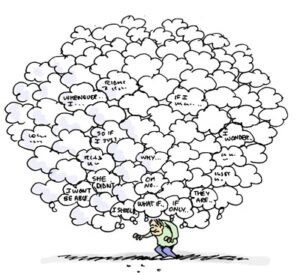
Even though you are more sober than ever – you might find that you’re also more raw, angry, fearful, and confused in relationships than you expected.
You find yourself emotionally reactive in ways that feel toxic, childish, or utterly bewildering.
You ask yourself things like:
– How am I finally sober and still this frustrated?
– Still this triggered?
– Still this confused?
Anyone on this path is all too familiar with what I’m referring to. Early on we might assume that once we stop abusing ourselves with an active addiction, everything will get better. And much of life does get better.
But the deeper truth is that saying goodbye to primary addictions introduces you to a new world of emotional and relational challenges, and most of us are not prepared for them.
This is where the next level of work begins.
Lots of Clean Time….… and Still Reactive
Early in my journey, emotional reactivity ran much of my relational life: avoiding, explaining, blaming, withdrawing, pleasing, controlling, shutting down.
If you had asked me then, I would have defended these ways of being. In fact, I did that a lot. At the time, I could not see that I was living in an emotionally reactive mindset and mode of relating much of the time.
To be clear, I also had emotionally sober moments, habits, and patterns. But they were consistently overwhelmed by non-constructive, and at times destructive ones. John Gottman describes this as negative sentiment override, a state in which frustration, distrust, and defensiveness shape how interactions are perceived and responded to.
Like many others, I was slow and resistant to acknowledging what was actually happening.
Addictions Mask Unhealed Relational Wounds
Sobriety reveals something that is quite humbling: your relationship struggles were never only about the addictive patterns.
Philip J. Flores, in his book Addiction as an Attachment Disorder, writes that addiction is a disorder of self-regulation. Individuals who become dependent on substances or behaviors struggle to regulate emotions, self-care, self-esteem and self-image.
For many of us, reading Flores created a genuine shift. It was not just about stopping an addictive pattern. It was about how we live in relation to other humans, the world and life itself. And to live constructively required that we address out “inability to tolerate painful affect”. In other words: we numbed out because we could not regulate our emotional life through honest and open interpersonal connection.
We escaped because we could not stay present in relationships.
We ran because we did not yet know how to show up in authentic, satisfying ways.
So when the drinking, using, gambling, binging, scrolling or spending stops, the underlying attachment wounds, nervous system patterns, and relational habits do not automatically repair themselves. Putting down the addiction stops the bleeding. It does not rebuild the body. Or the person.
This is why relationships can suddenly feel so intense.
So raw.
So confusing.
So filled with patterns that baffle us.
Learning to be emotionally sober (i.e. authentic and connected with healthy boundaries as needed) becomes the next mountain to climb. One step at a time.